
SIDES School Goal Two S
To increase literacy outcomes for all students.
How can we strengthen literacy among Grades 9 - 12 learners by supporting the development of essential reading, writing, and oral communication skills as well as cultivating critical skills in navigating, evaluating, and creating diverse digital content?
In addition, how can we promote responsible and ethical technology use across academic disciplines, empowering students to engage thoughtfully with high-quality texts - including digital media, visual texts, audio content, and multimodal resources?
Our Grades 9 - 12 students engage in remote learning with varying levels of digital fluency and access to technology. Many are self-directed learners who rely heavily on digital tools for communication, research, and coursework. They come from diverse backgrounds and bring a wide range of experiences with online platforms, media, and digital collaboration. While some students transition to SIDES for greater flexibility or specialized support, others remain long-term and pursue graduation through our program. In this context, the digital environment serves as both the medium and the message - making it essential that students are equipped to critically engage with digital content and tools in meaningful, ethical, and effective ways.
This goal and focused inquiry question aligns directly to our district strategic priority in Literacy. Additionally, our intended approaches are deeply connected to First Peoples Principles of Learning.

First Peoples Principles of Learning

The Literacy Goal needs to ensure that:
- Learning is holistic, reflexive, reflective, experiential, and relational (focused on connectedness, on reciprocal relationships, and a sense of place).
- Learning is embedded in memory, history, and story.
- Embed digital literacy outcomes into core subjects (English, Social Studies, Career Education).
- Teach source evaluation, media bias, and digital identity management.
- Provide tools for multimedia creation, presentations, and collaboration.
- Engaging in professional development for digital literacy instruction.
- Encourage students to reflect on strategies for online learning.
- Use LOR resources to enhance instruction, especially in writing and digital literacy.


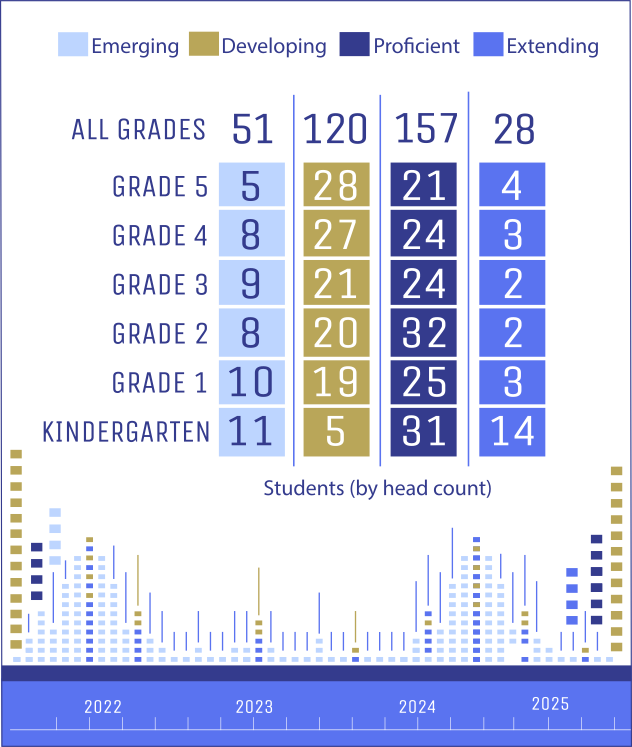
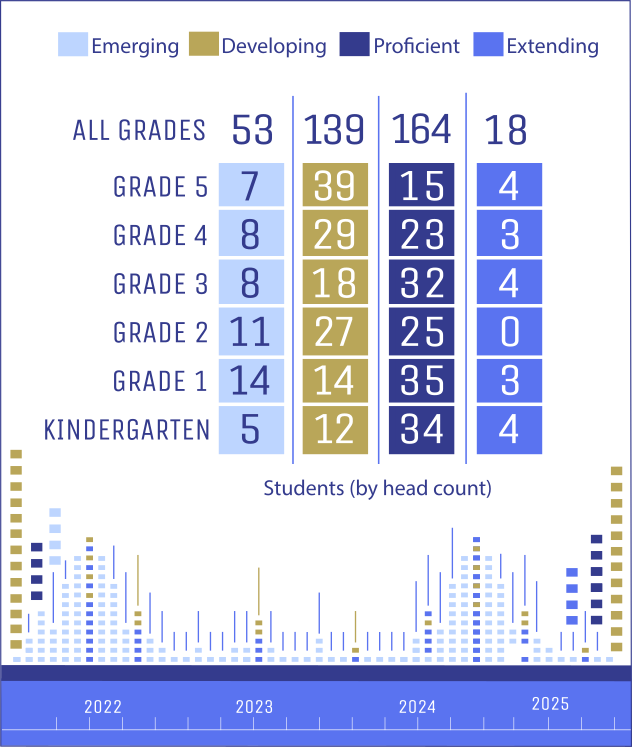
Students are demonstrating increased confidence in using digital tools for research and communication, with noticeable improvements in source evaluation and citation practices. However, concerns remain around an over-reliance on AI-generated content. Teachers report greater integration of digital literacy tasks across subjects, though approaches to addressing AI use vary. There has been a rise in ethically questionable uses of AI, including incidents of copying and cheating, which raise concerns about academic integrity and the authenticity of student work. We are exploring ways to create clear guidelines and proactive education around responsible AI use, students may continue to rely on these tools in ways that undermine meaningful learning.
- Building a Digital Literacy Framework
- Build on District level guidelines and develop school-wide expectations for responsible AI use
- Create modules on AI ethics, academic integrity, and critical thinking
- Enhancing Authentic Digital Learning
- Expand student opportunities for blogging, podcasting, and data visualization.
- Shift focus from assignment counts to meaningful daily learning experiences.
- Supporting Instruction and Assessment
- Strengthen tools to assess literacy growth.
- Provide clear instructions for using digital tools like the Read Tool in D2L.
- Offer professional development for remote digital literacy instruction.
- Promoting Ethical AI Use and Academic Integrity
- Address AI misuse through coordinated instruction and clear standards.
- Design assessments that encourage original thinking.
- Use data to identify trends, close learning gaps, and celebrate progress.