Literacy Learning at Home
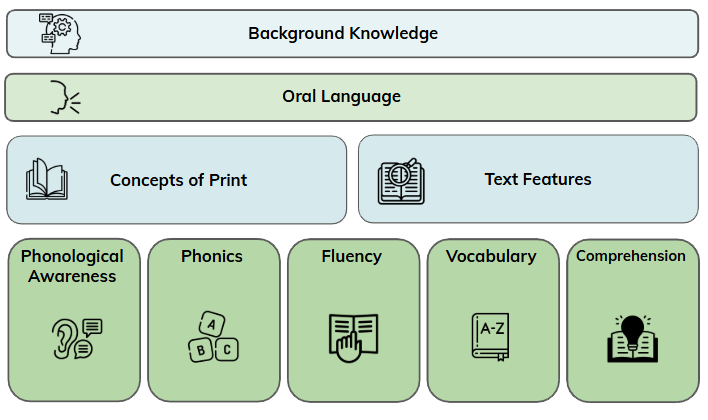
Reading is an amazing and complex skill, and children build it step by step with support from both home and school. It involves many parts, like understanding sounds, recognizing words, building vocabulary, and making meaning from what they read. Every child develops these skills at their own pace, and families play a powerful role in helping them grow. On this site, you’ll find simple explanations of each component and how they work together to help your child become a confident, joyful reader.

When children know something about a topic before they read, it’s much easier for them to understand what they’re reading. Background knowledge helps them make connections, learn new words, and follow the story or information more easily. When children share their own cultures and experiences, everyone learns more and grows together.
- Talk about everyday moments such as cooking, shopping, or being outside to introduce new ideas and vocabulary. Ask questions, notice new things together, and explain new words in simple ways.
- Explore a wide range of topics together through a variety of books, videos, museums, and nature to build general knowledge.
- Invite your child to share their own culture and interests so they feel valued and everyone learns from one another.

Talking with children and exposing them to books from an early age helps build strong oral language skills. These early conversations and reading experiences lay the foundation for later learning. A child’s oral language skills in preschool are strong predictors of how well they will read as they grow.
- Talk with your child often during daily routines. Describe what you’re doing, ask simple questions about what they are doing, thinking and feeling.
- Read together every day, even for just a few minutes, and talk about the pictures, characters, and events to build understanding and vocabulary.
- Offer rich language experiences through songs, storytelling, pretend play, and conversations with family and friends to help your child develop strong speaking and listening skills.
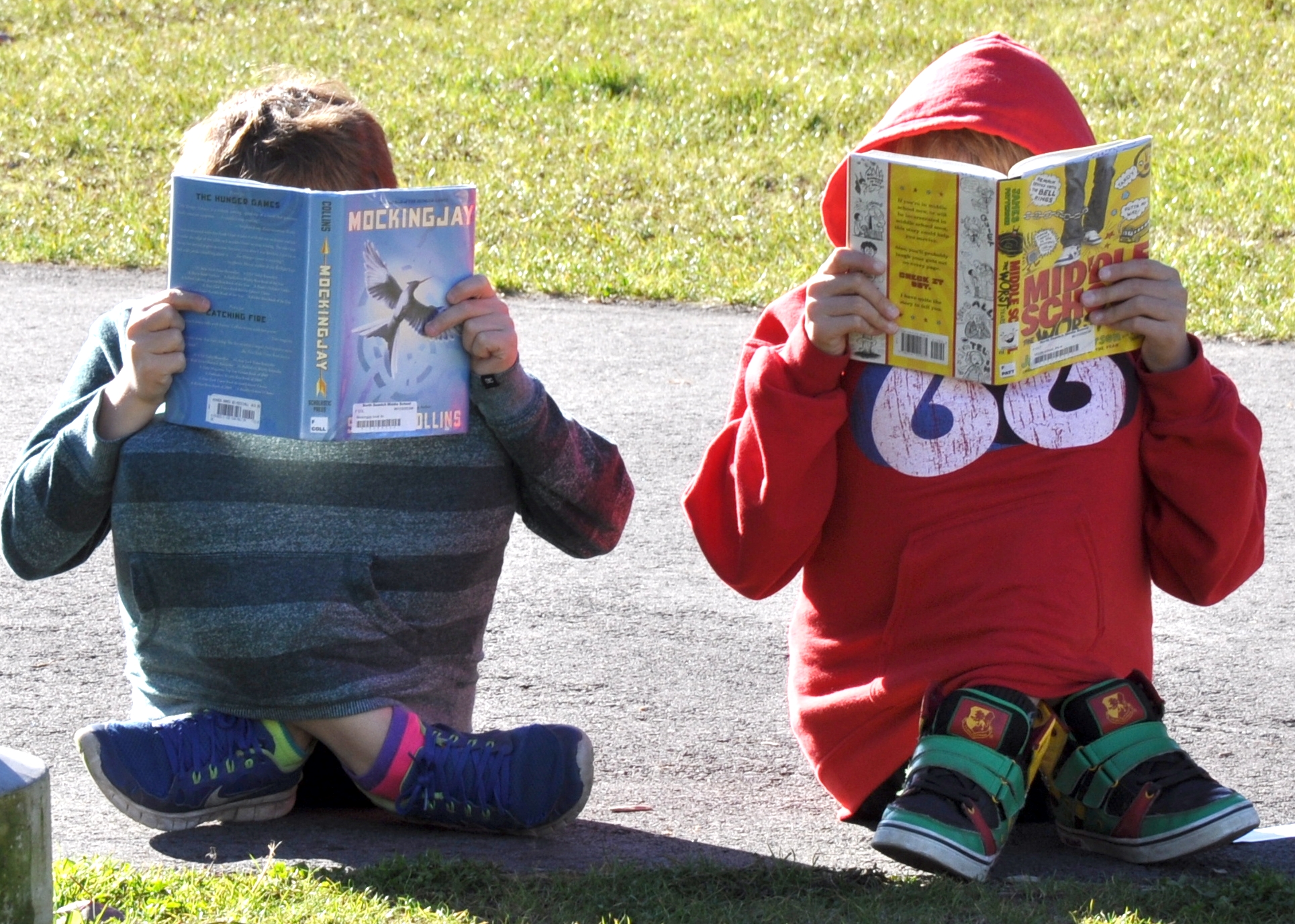

When adults model how to use a book, children start learning important reading habits. They notice that books have titles and authors, that letters make up words, and that words form sentences. As they’re read to, children also learn that we read from left to right, top to bottom, and that sentences end with punctuation. These early understandings help build a strong foundation for reading.
- Show how books work by pointing out the title, author, and how to hold and turn pages.
- Notice print together like letters, words, and sentences while reading aloud, so children begin to see how print carries meaning.
- Point out directionality and punctuation by sliding your finger under the words and noticing end marks like periods or question marks as you read.

Text features like the table of contents, headings, glossaries, maps, charts, and diagrams help children find and understand information. As students become more independent readers, they learn to use these features to gather important details and support their understanding of the text.
- Point out text features such as headings, bold words, and the table of contents when reading together so children see how they help organize information.
- Use visuals like maps, charts, and diagrams to talk about what they show and how they add meaning to the text.
- Encourage your child to use text features independently by asking questions like “Where could we look to find that information?” to build confidence and understanding.
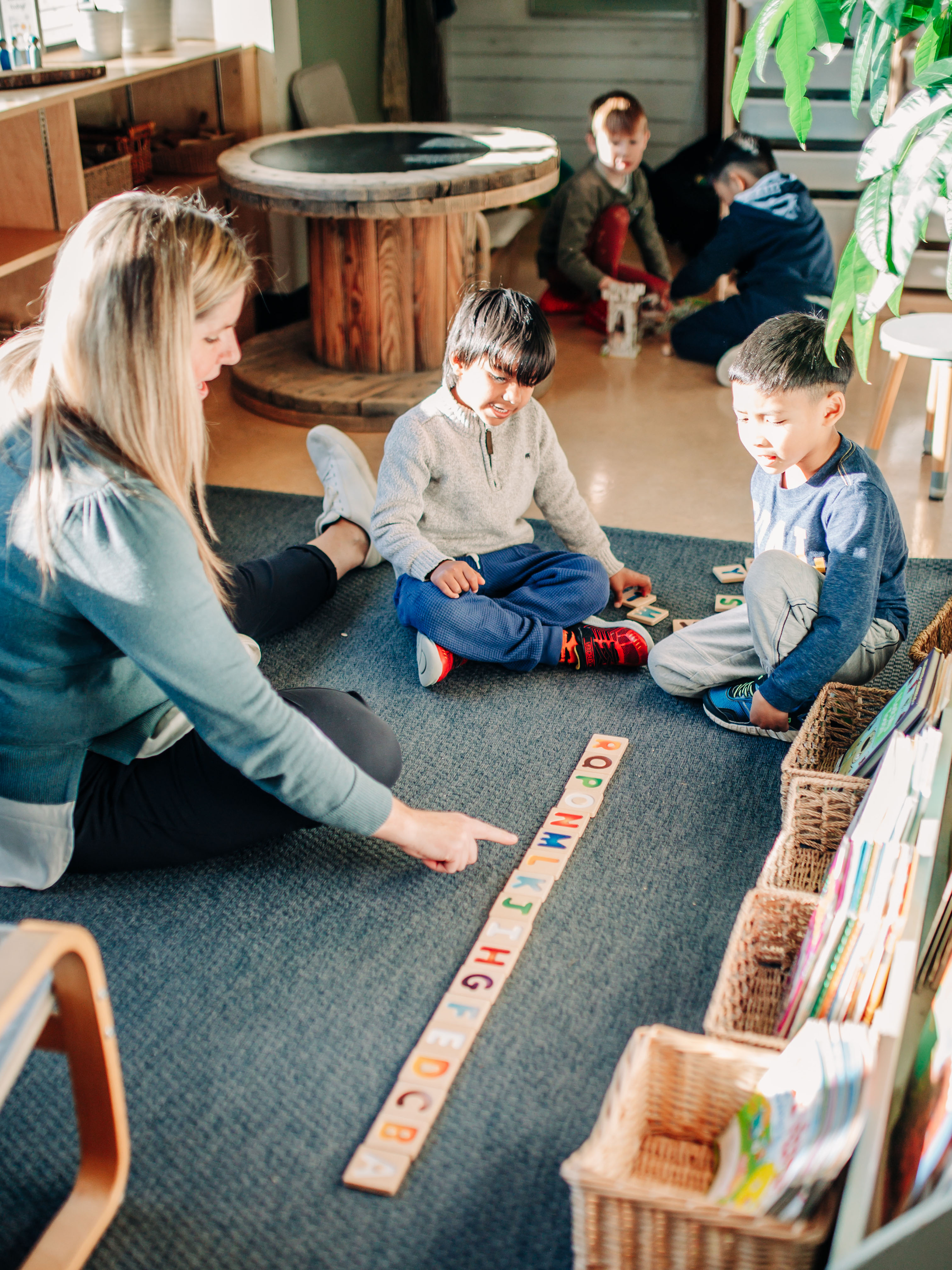


Phonological awareness is a child’s ability to hear and play with the parts of spoken words like rhymes, syllables, alliteration, and sound patterns. Phonemic awareness is a more advanced skill and involves hearing and working with individual sounds (phonemes) in words. These skills help children blend, break apart, and change sounds, which are important steps toward learning to read.
- Play with word parts by clapping syllables, noticing rhyming words, and enjoying songs or poems with repeating sounds.
- Help your child listen for individual sounds by stretching out simple words (like m‑a‑p) and having them blend the sounds together.
- Practice changing sounds in words. Try swapping the first sound in cat to make bat, or removing a sound to make a new word.
Phonics is a way of teaching reading that helps children connect letters to the sounds they make. Students learn to blend these sounds together to read words. When words do not follow regular patterns, students are taught helpful rules and patterns to figure them out. In the intermediate grades, phonics still plays an important role as students learn to read longer, more complex words. This instruction helps them build fluency and better understand challenging vocabulary. It also supports students who may still need practice with foundational reading skills.
- Teach letter‑sound relationships clearly and directly so children can blend sounds to read regular words and use rules and patterns to tackle irregular ones.
- Support decoding of multisyllabic words by breaking words into parts.
- Provide ongoing phonics practice to improve skills to develop confident, fluent readers.

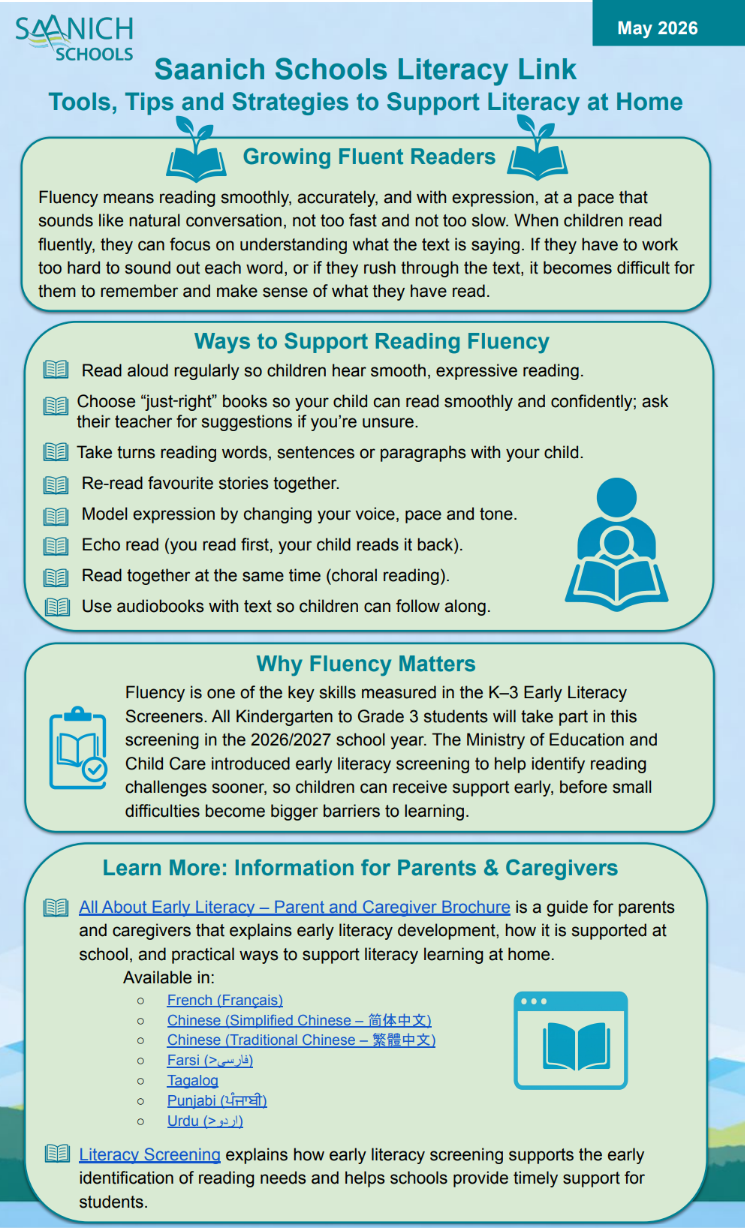
Fluency means reading smoothly, accurately, and with expression. When children read fluently, they can focus on understanding what the text is saying. If they have to work too hard to sound out each word, it becomes difficult for them to remember and make sense of what they read. Read aloud to your child using a smooth, expressive voice so they can hear how good reading sounds, including the rhythm and tone.
- Share the learning. Take turns reading words, sentences or paragraphs with your child.
- Use repeated reading by having your child read the same short text more than once, either alone or with a partner, to build accuracy and confidence.

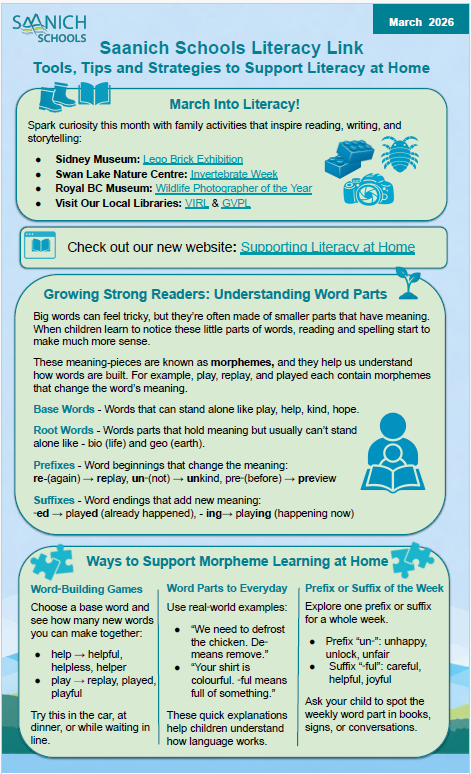
Vocabulary is the collection of words a child understands and can use to communicate. The more words children know, the easier it is for them to understand what they read and to express their ideas. Students learn new words by hearing them, seeing them, saying them, and writing them many times. Learning about word parts, such as prefixes and suffixes, also helps children understand meaning and figure out new words. Research shows that teaching students how words are built can significantly improve vocabulary growth.
- Use and explain new words often in conversations, books, and daily activities so children hear vocabulary in meaningful contexts.
- Teach child-friendly definitions and give children chances to see, hear, say, and write new words multiple times to help the words stick.
- Build word knowledge through morphology by exploring prefixes, suffixes, and root words, which helps children understand meaning and decode unfamiliar words.

Comprehension is a child’s ability to understand and make meaning from what they read. Strong comprehension grows when students have background knowledge, good phonological awareness, solid phonics skills, strong fluency, and a rich vocabulary. Students also learn comprehension strategies, such as making predictions, summarizing, asking questions, and connecting new information to what they already know. Instead of teaching these strategies one at a time, experts suggest using several together while reading so children get a fuller understanding of the text.
- Help your child build strong basics by talking about what they know, practicing sounds and phonics, building vocabulary, and reading smoothly.
- Use several reading strategies together by making predictions, asking questions, and talking about the story as you read.
- Have conversations about the book by asking what they noticed, what surprised them, or what they are still wondering about.
Blend - Two or more consonants that are said together while still keeping their individual sounds (like bl in blue).
Blending - Putting individual sounds together to read a word (for example, /c/ + /a/ + /t/ becomes cat).
Decoding - Using phonics knowledge to sound out and read unfamiliar words.
Decodable Texts - Books that use phonics patterns children have already learned so they can practice real reading.
Digraph - Two letters that work together to make one sound (like sh in ship).
Grapheme - The letter or group of letters that represents a single sound (like a, sh, or igh).
Long Vowel - A vowel sound that says the name of the letter, like the a in cake or the o in go.
Morpheme - The smallest unit of meaning in a word (for example, play, replay, and played each contain morphemes that change the word’s meaning).
Morphology - Understanding word parts (prefixes, suffixes, roots) to support vocabulary, spelling, and comprehension.
Phonics - Understanding how letters and sounds connect so children can read and spell.
Phoneme - The smallest sound in a word (for example, the word ship has three phonemes: /sh/ /i/ /p/).
Prefix - A word part added to the beginning of a word that changes its meaning (like un- in undo).
Reading Strategies - Tools readers use, such as asking questions, predicting, or summarizing, to help them understand text.
Schwa - A relaxed, unstressed vowel sound that sounds like “uh,” often found in the middle of words (like a in about or e in taken).
Short Vowel - A vowel sound that is quick and says its “common” sound, like the a in apple or the e in bed.
Sight Words / High‑Frequency Words - Common words that children should recognize quickly and easily without sounding them out.
Structured Literacy - A teaching approach that is explicit, systematic, and evidence‑based; includes phonics, decoding, spelling, and language comprehension.
Suffix - A word part added to the end of a word that changes its meaning or how it’s used (like -ing in running).
Word Families - A group of words that share the same ending pattern and rhyme, which helps children recognize spelling patterns (for example, cat, bat, hat).
Writing Conventions - Rules of writing such as spelling, punctuation, capitals, and grammar.
Structured literacy is a research‑based approach to teaching reading that is clear, explicit, and systematic. It helps all children learn to read and supports those who may need extra help. A structured literacy program includes:
Direct, step‑by‑step teaching - Teachers clearly explain each skill and teach them in a logical order, starting with simple concepts and moving to more complex ones.
Regular practice with phonological awareness and phonics - Students learn how sounds work in spoken language and how those sounds connect to letters and patterns.
A focus on decoding and writing - Children practice sounding out words, breaking them into parts, and using what they know about word structure to support their reading and writing.
Lots of repetition and review - Skills are practiced often so students build accuracy, confidence, and automaticity.
Support for vocabulary and comprehension - Students learn new words, talk about their meanings, and practice strategies that help them understand what they read.
Clear and consistent progress monitoring - Teachers regularly check how students are progressing to ensure instruction matches their needs.
Instruction that benefits all learners - Structured literacy supports every child, whether they are picking up reading quickly or need more targeted support.
In the fall of 2025, all kindergarten students participated in literacy screening as part of the Ministry of Education and Childcare’s Literacy Supports Initiative. This initiative was designed to identify reading challenges sooner, so students receive support before small struggles become big barriers. Beginning in the fall of 2026, all kindergarten through Grade 3 students in B.C. will participate in early literacy screening.
Early literacy screening is a short, teacher-led assessment that helps teachers understand your child’s early reading skills. It focuses on foundational literacy skills such as:
- Letter and sound recognition
- Phonological awareness (hearing and working with sounds)
- Phonemic awareness (hearing and manipulating sounds in spoken words)
- Phonics (connection of sounds to printed letters)
- Oral language
- Decoding skills
These assessments are evidence-based, reliable and designed to predict future reading performance. These brief check-ins are done 2-3 times a year to help teachers understand how children are progressing in their learning and plan interventions and supports.
Screening helps ensure students get the support they need early. It :
- Identifies students who may benefit from extra support.
- Allows for early intervention before challenges grow.
- Helps teachers plan instruction for the whole class and for individual learners.
Literacy screening is:
- A quick check of foundational reading skills
- One piece of information used to support learning
- A tool to guide teaching and support
Literacy screening is NOT:
- A test or exam
- Used for report card grades or proficiency levels
- A full assessment of all reading skills
- A diagnosis of a learning difficulty
Screening is brief and designed to be supportive and age-appropriate.
- Your child will work one-on-one with their teacher
- Some activities may be timed to understand how quickly and accurately skills are used (fluency)
- If a task becomes too difficult, it is stopped, so students are not frustrated
Teachers use screening information to:
- Plan classroom instruction
- Identify students who may need additional support
- Monitor progress over time
If needed, teachers may use additional assessments to better understand a child’s learning needs.
Parents and teachers may discuss screening as part of informal conversations about a child’s progress during the year. These conversations can help you:
- Understand how your child’s literacy skills are developing
- Learn simple ways to support reading at home
Yes. All students in Kindergarten to Grade 3 will participate in literacy screening, including:
- French immersion students
- English Language Learners (ELL)
- Students with diverse abilities
Teachers make thoughtful considerations to ensure the process is respectful and appropriate for each learner.
French Immersion:
- Kindergarten students will be screened in English at the beginning of the year
- Screening shifts to French mid-kindergarten as their language skills develop
English Language Learners:
- Screening results are interpreted with care
- Language differences (e.g., accent or pronunciation) are not counted as errors
If a student is not yet proficient in English, teachers may use extra tools to better understand learning
Students with diverse abilities:
- Most students can participate, but there may be exceptions
- In some cases, teachers work with school-based teams and case managers to determine the most appropriate approach
All About Early Literacy – Parent and Caregiver Brochure is a guide for parents and caregivers that explains early literacy development, how it is supported at school, and practical ways to support literacy learning at home.
Available in:
- French (Français)
- Chinese (Simplified Chinese – 简体中文)
- Chinese (Traditional Chinese – 繁體中文)
- Farsi (>فارسی)
- Tagalog
- Punjabi (ਪੰਜਾਬੀ)
- Urdu (>اردو)
Literacy Screening explains how early literacy screening supports the early identification of reading needs and helps schools provide timely support for students.
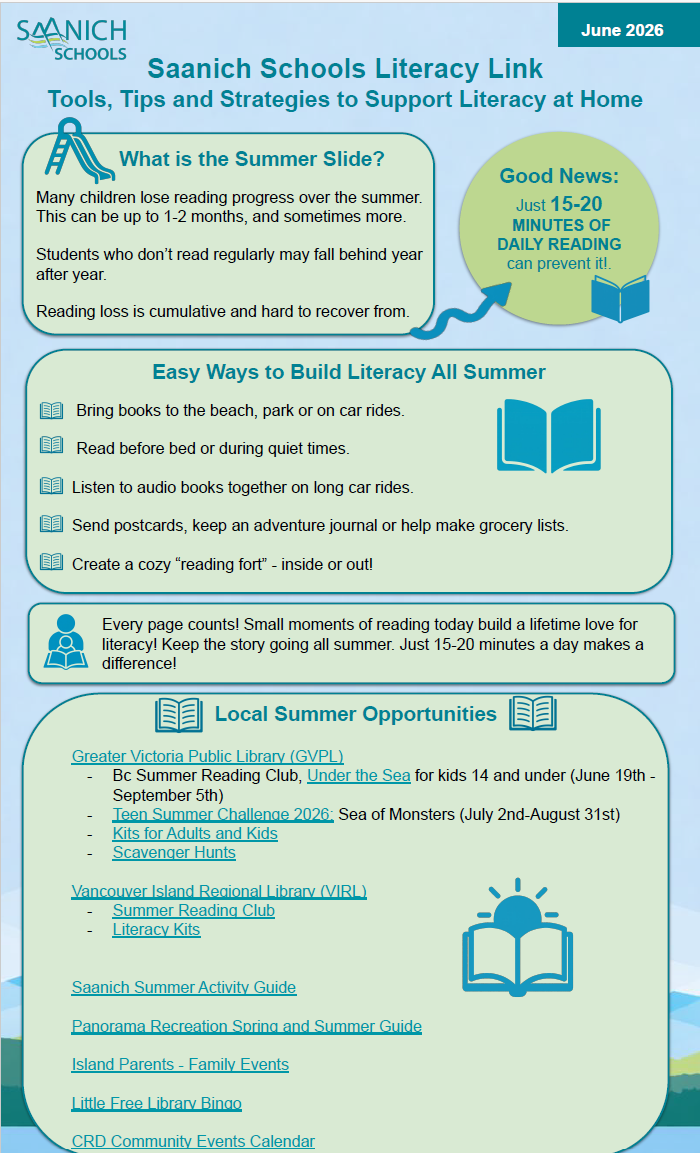
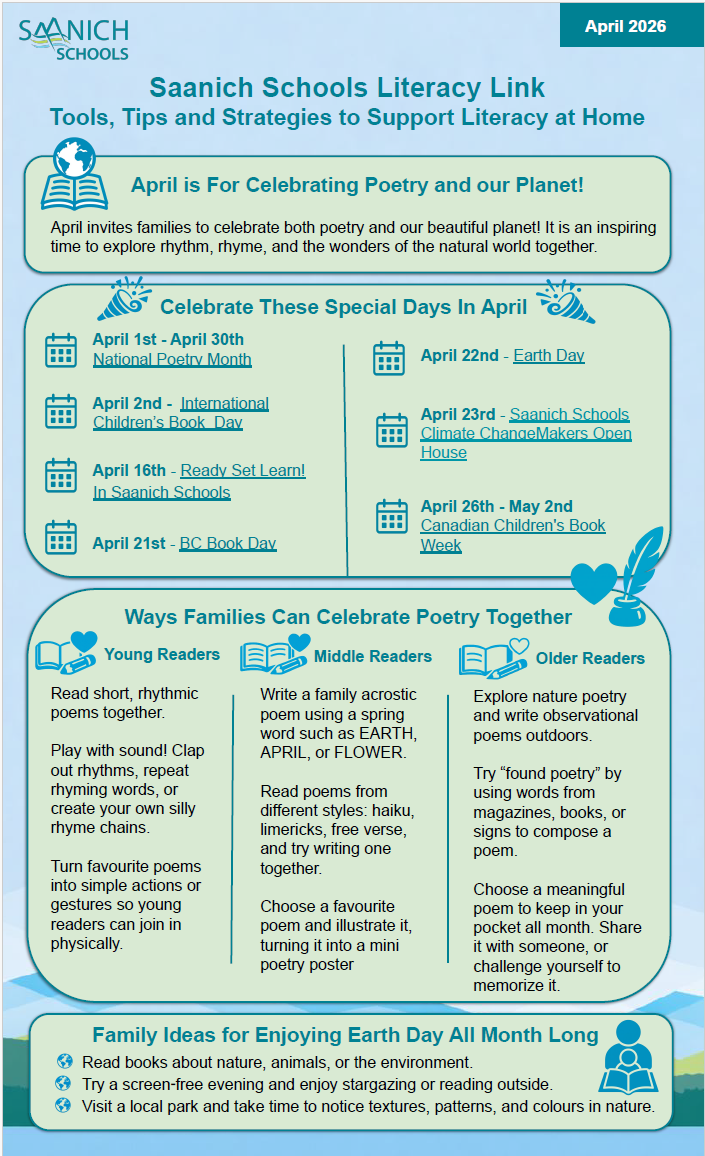
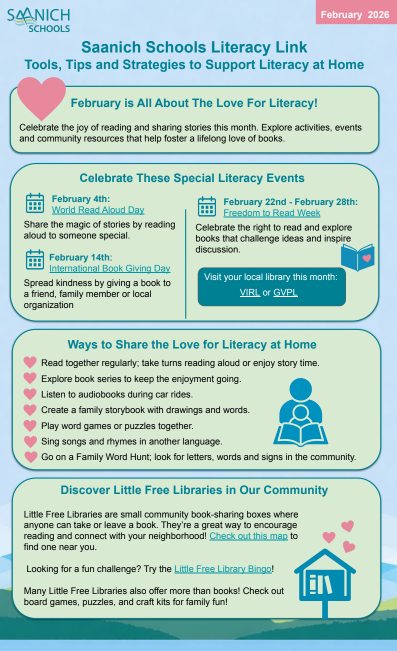
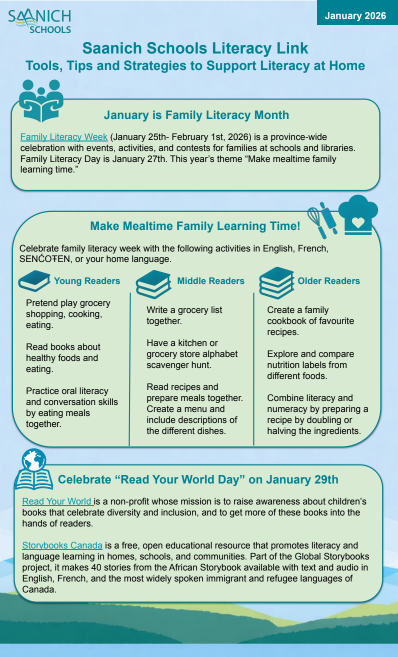
A monthly infographic providing families with accessible tips, strategies, activities, and community resources that support literacy learning in joyful, meaningful ways. Each issue highlights timely events, practical ideas for all ages, and inspiration to help families engage with literacy at home.